
SA CATALYST PROJECT
Aboriginal–Māori
knowledge exchange
Cultural strength and shared knowledge for community-led Comfort Care.
From Kaurna Country in Adelaide to Waikato in Aotearoa New Zealand, Aboriginal and Māori Elders, community leaders and practitioners came together to share what culturally safe care means to our peoples.
NATSIPCA is proud to be part of this international Catalyst partnership, alongside community organisations, health services and researchers from South Australia, Aotearoa and the United Kingdom.
Across two knowledge exchanges, culture, kinship and trusted relationships emerged as the foundations for care, including how telehealth is designed and used.
Recognised at NALHN Research Week 2026
Health Translation SA Excellence in Consumer and Community Involvement in Research Award.
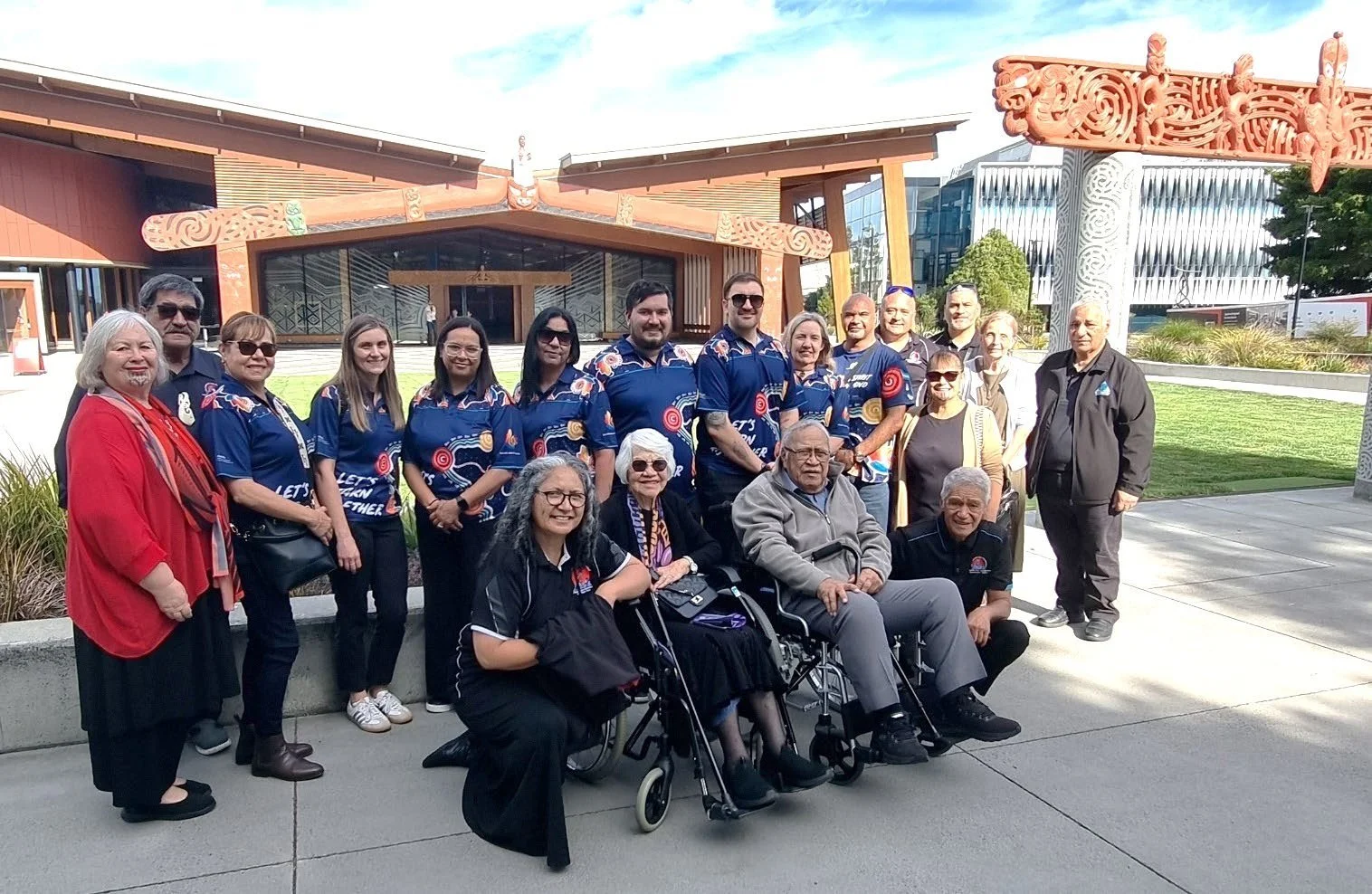
Aboriginal and Māori participants together at The Pā, University of Waikato, during the Aotearoa knowledge exchange.
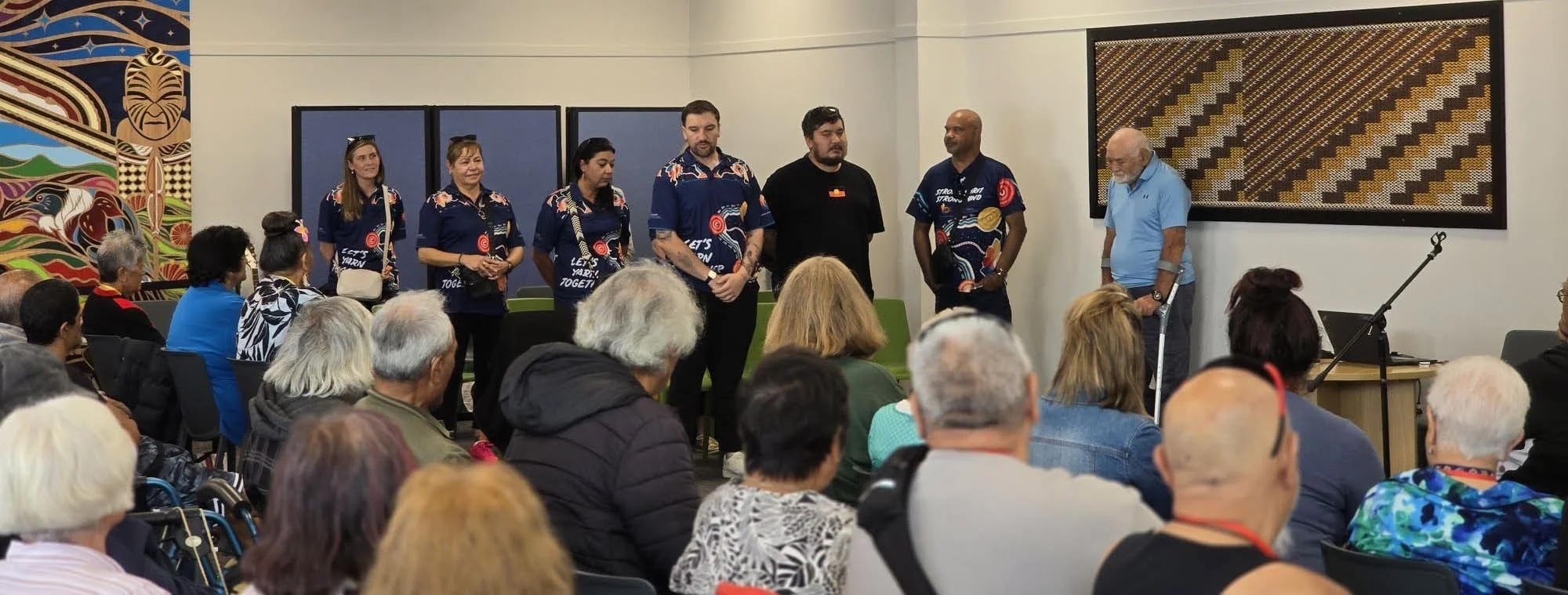
Together in Adelaide: participants in the Catalyst Aboriginal Yarning Round Table and international knowledge exchange.
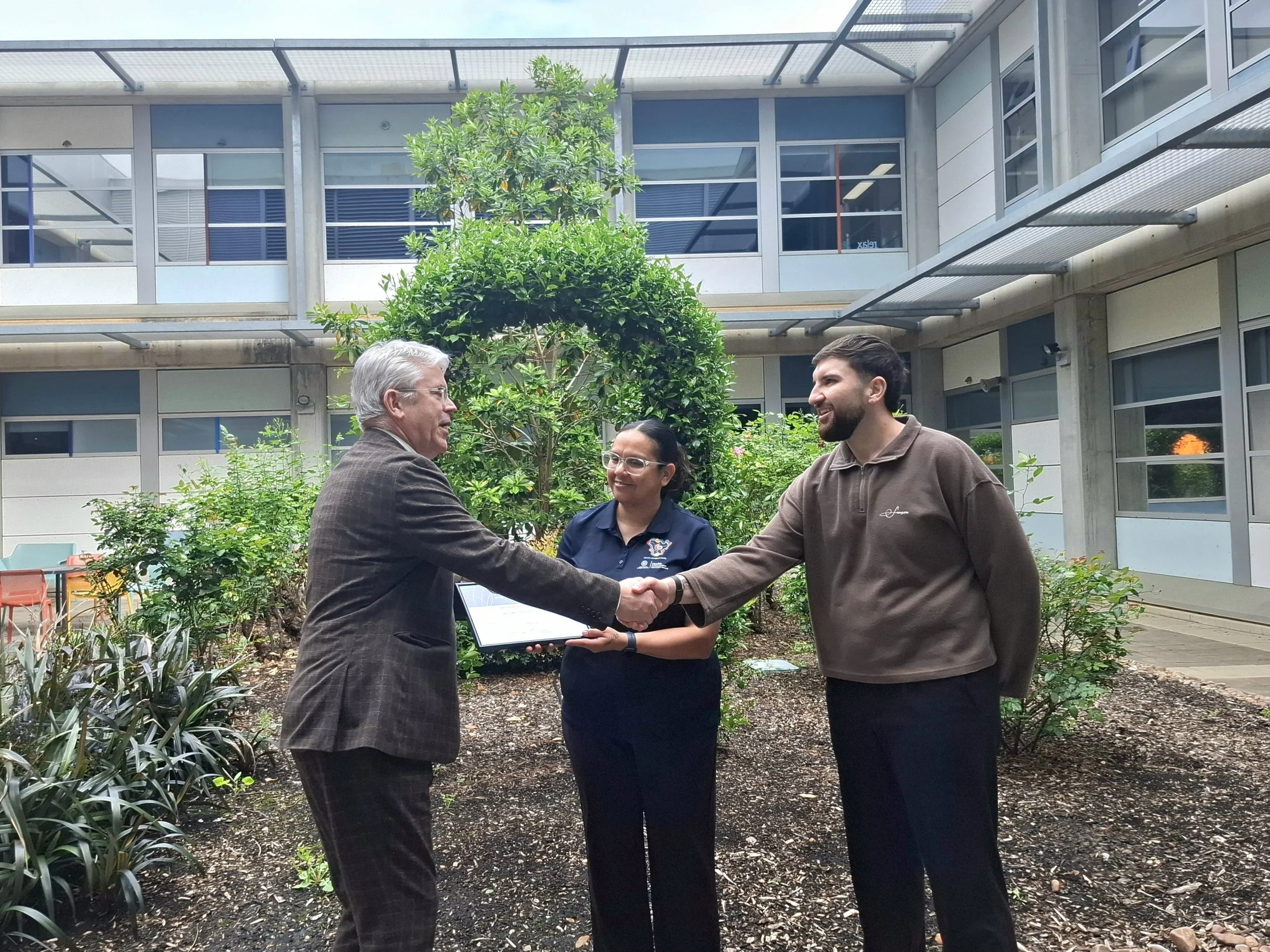
Jarrad Benbolt-Agius and colleagues at the Health Translation SA award presentation, NALHN Research Week 2026.
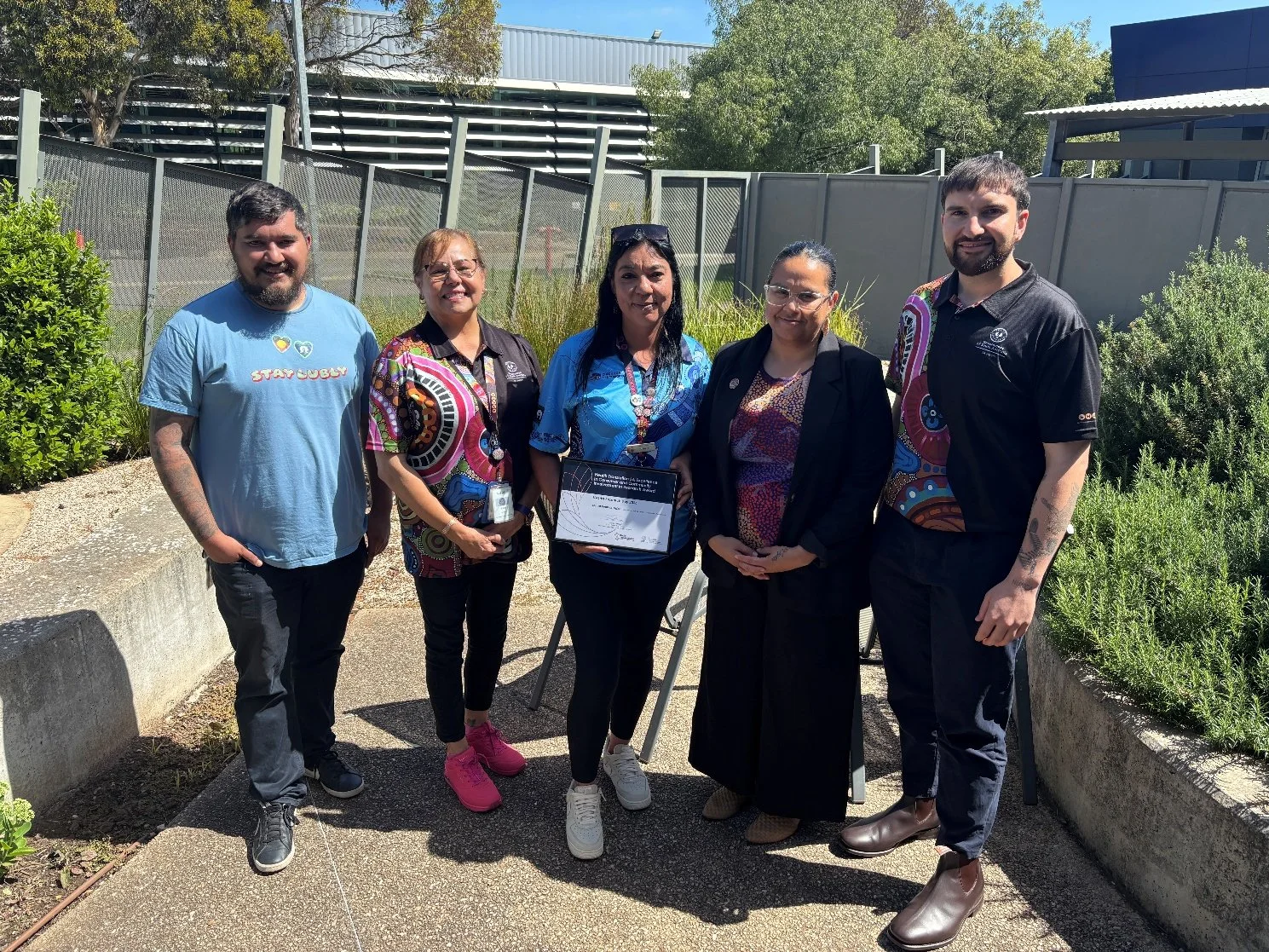
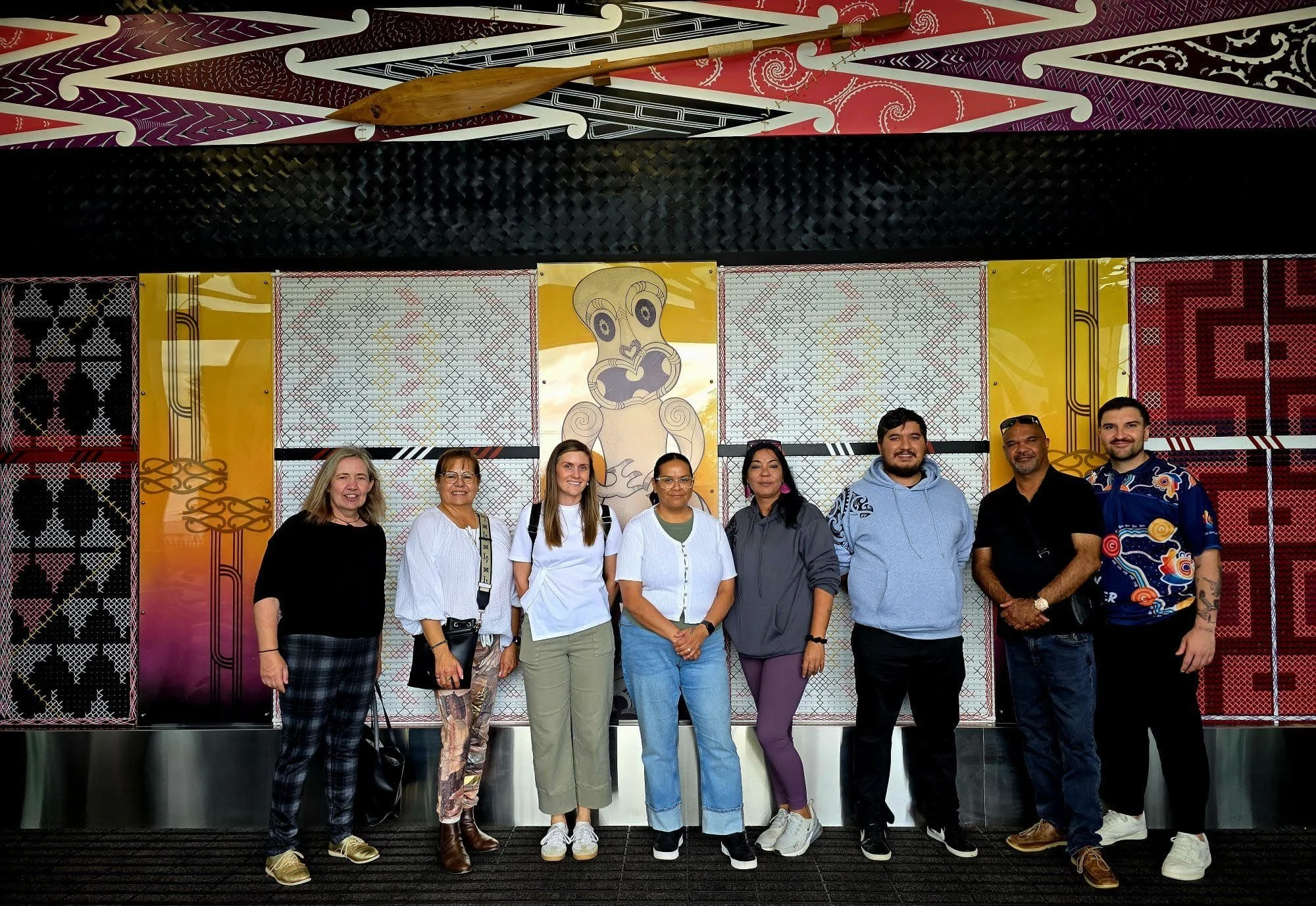
Isaiah Butler-Bull, Zena Bonney, Cherie Allan, Rikki Arbon and Jarrad Benbolt-Agius — members of the NALHN delegation who participated in the Aotearoa New Zealand knowledge exchange.
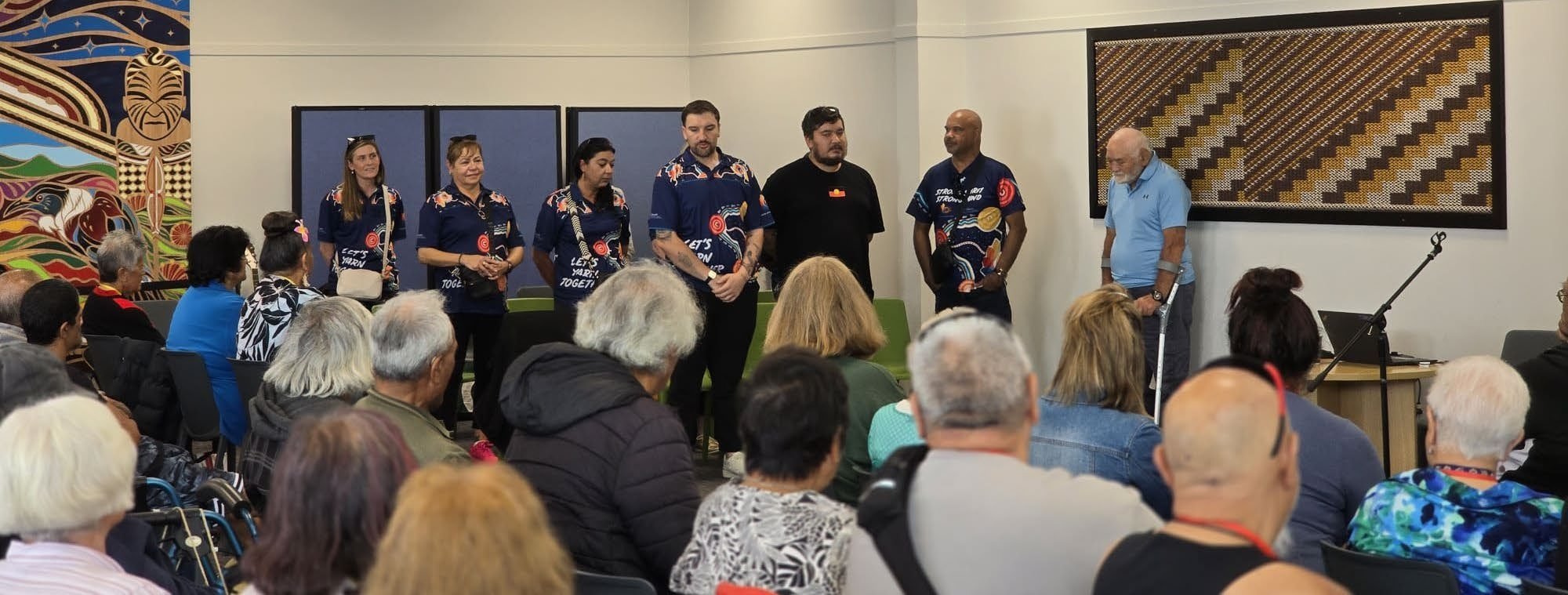
Sharing knowledge and connection with kaumātua at Rauawaawa Kaumātua Charitable Trust.
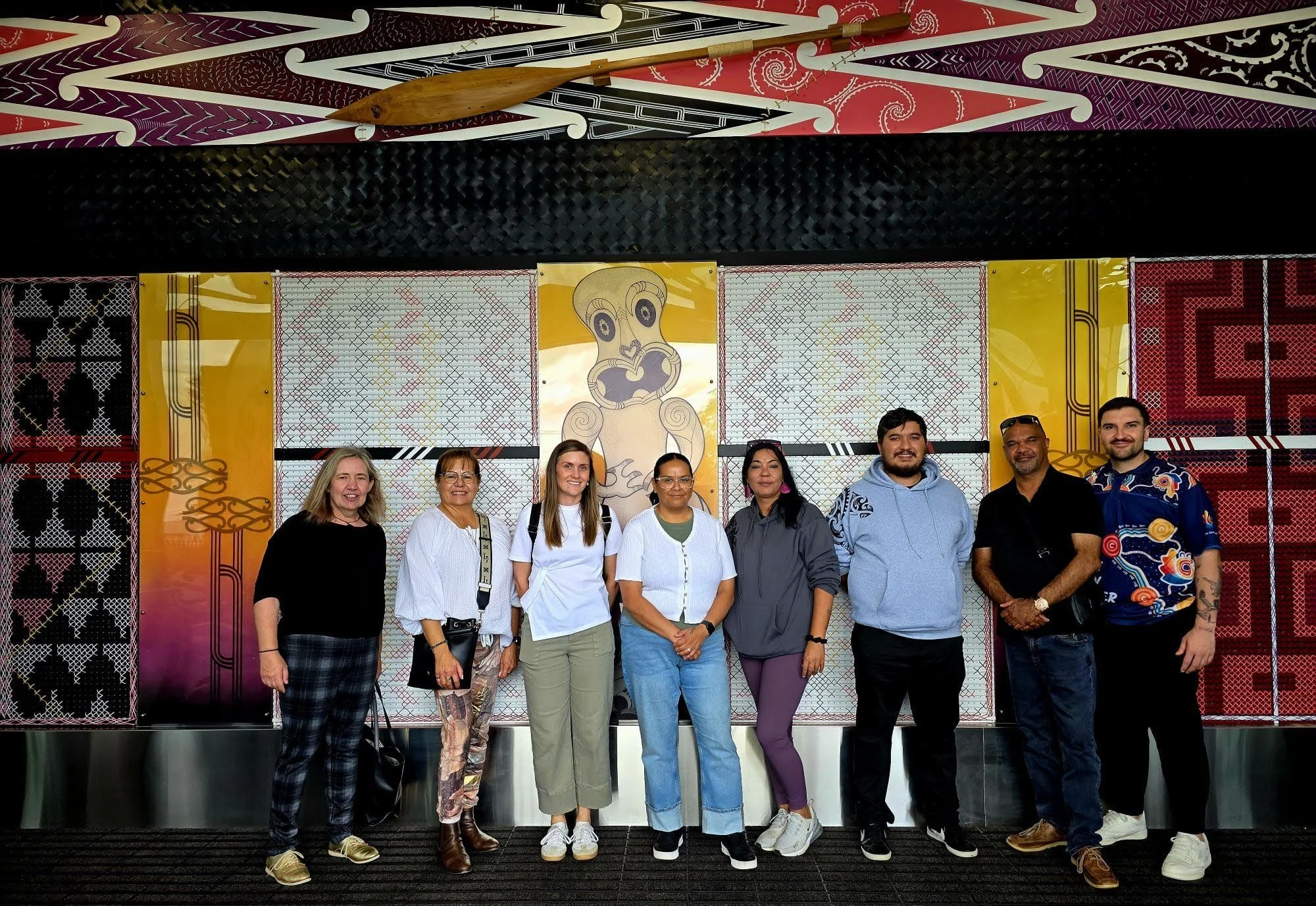
The Adelaide delegation during the Aotearoa knowledge exchange.
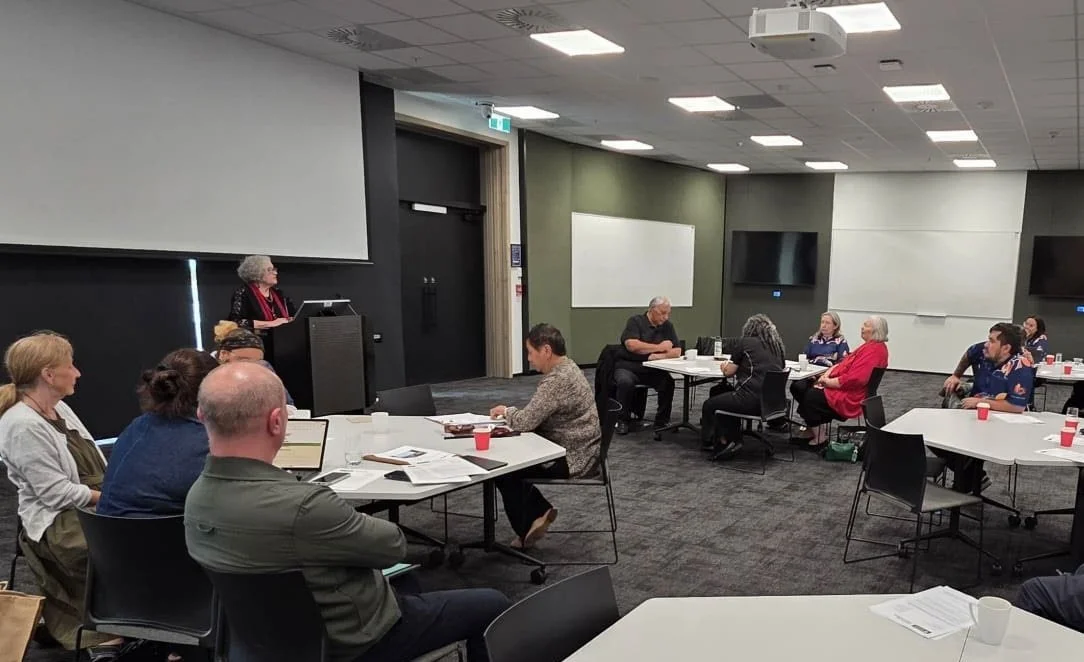
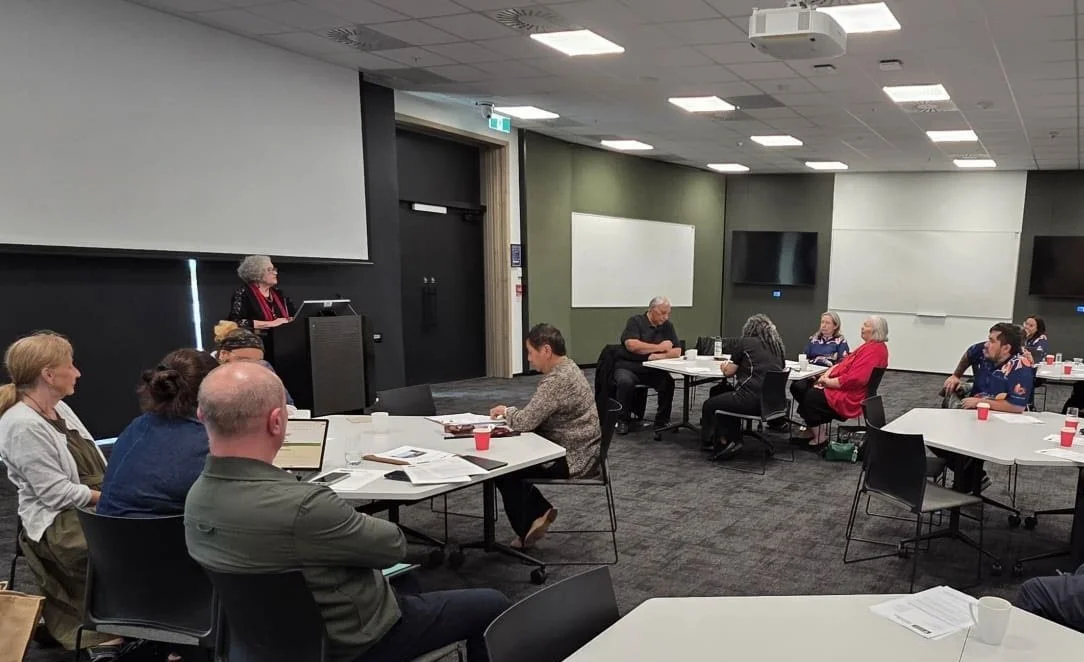
Listening and discussion during the Aotearoa knowledge exchange.
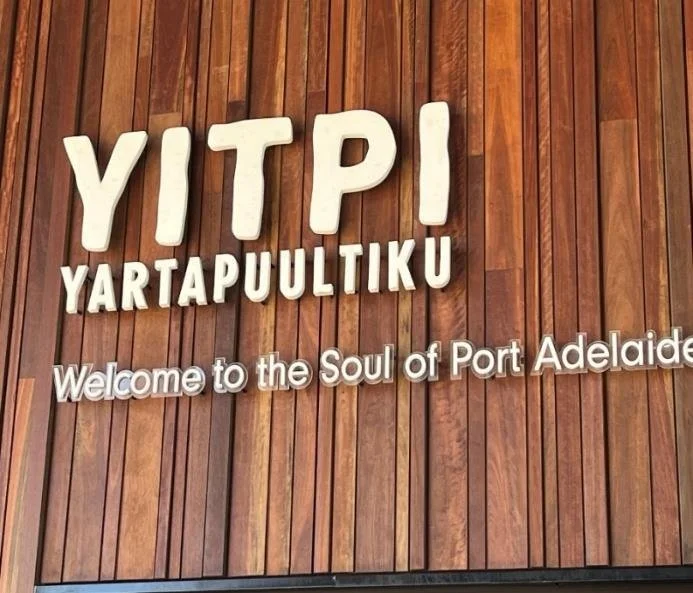
Yitpi Yartapuultiku Aboriginal Cultural Centre, the setting for the Adelaide Yarning Round Table.
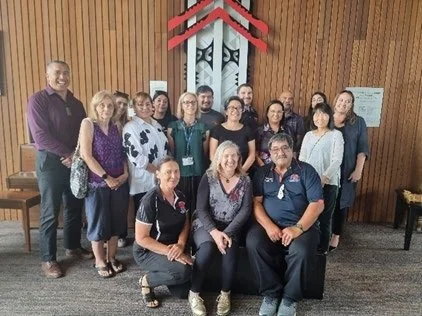
The exchange delegation visiting Cancer Society Hamilton.
SA Catalyst Project
Aboriginal–Māori knowledge exchange
Cultural strength and shared knowledge for community-led Comfort Care.
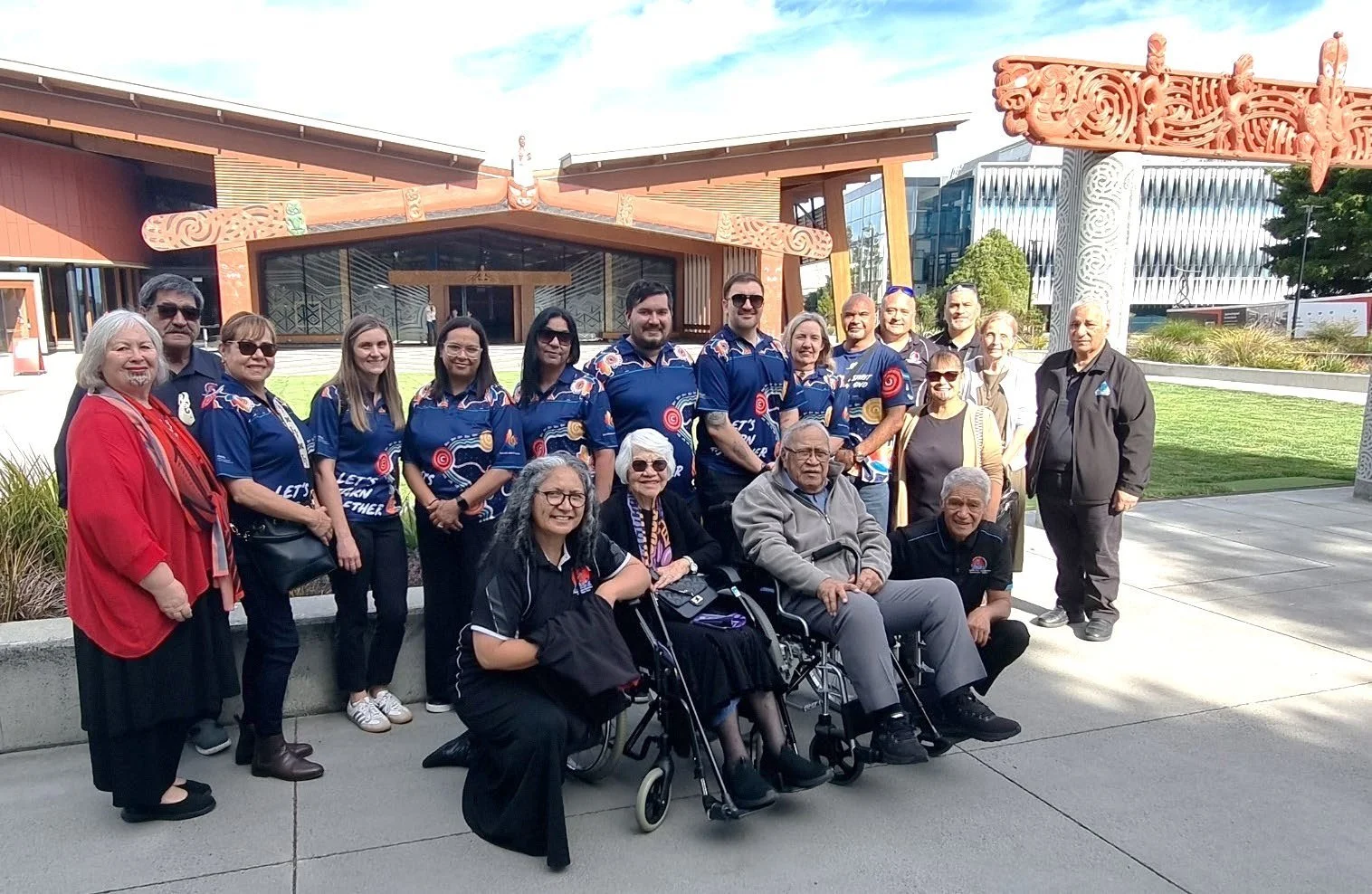
From Kaurna Country in Adelaide to Waikato in Aotearoa New Zealand, Aboriginal and Māori Elders, community leaders and practitioners came together to share what culturally safe care means to our peoples.
NATSIPCA is proud to be part of this international Catalyst partnership, alongside community organisations, health services and researchers from South Australia, Aotearoa and the United Kingdom.
Across two knowledge exchanges, culture, kinship and trusted relationships emerged as the foundations for care, including how telehealth is designed and used.
Recognised at NALHN Research Week 2026
Health Translation SA Excellence in Consumer and Community Involvement in Research Award.
“Telehealth never replaces the heart of care. The heart of care is connection.”
Shared in the Catalyst Aotearoa knowledge exchange report.
The journey together · 2025–2026
Two places of learning, connected through relationship
Aboriginal and Māori peoples brought distinct cultural knowledge and experiences to this exchange. Shared priorities grew through listening, yarning, kōrero and time together, with respect for the authority of each community.

Beginning with Aboriginal voices
The Adelaide Yarning Round Table at Yitpi Yartapuultiku Aboriginal Cultural Centre brought together more than 50 Elders, consumers, clinicians, researchers and service representatives, alongside visiting partners from Aotearoa and the United Kingdom.
Participants spoke about trust, cultural safety, racism, returning to Country, and the need for services to respond to local kinship and cultural authority. The language of Comfort Care was preferred as a more culturally meaningful way to talk about care.
Cindy Paardekooper and Kathy Pearce shared NATSIPCA’s Comfort Care approach, connecting cultural and clinical knowledge with the choices of people, families and communities.
Learning alongside Māori communities
A pōwhiri at The Pā, University of Waikato, welcomed the group into the next stage. The Knowledge Exchange Day and community visits explored how tikanga, whānau, cultural leadership and everyday relationships shape care.
Hosts included Rauawaawa Kaumātua Charitable Trust, Te Kōhao Health, Hospice Waikato, Cancer Society Hamilton and the Kiwi Coffin Club in Rotorua.
Time with kaumātua and community organisations showed care grounded in belonging, dignity and collective responsibility. Telehealth was considered through its ability to support these relationships and reduce the burden on families.

NATSIPCA’s contribution
Bringing the Comfort Care movement into the conversation
NATSIPCA supported this partnership from its beginnings. Through Cindy Paardekooper and Kathy Pearce’s contribution in Adelaide, and Cindy’s recorded message for the Aotearoa exchange, the work carried a Comfort Care perspective grounded in Aboriginal Ways of Knowing, Being and Doing.
Our contribution centres the right of Aboriginal and Torres Strait Islander people to receive culturally responsive care how, when and where they choose, with family, kin, community and Country recognised in that journey.
The exchange strengthened a shared call for Indigenous peoples to lead the design, governance and delivery of care, with services accountable to communities.
A message from Cindy Paardekooper

What the exchanges brought forward
Culture and community shape safe care
These emerging principles were drawn from discussions, presentations and observations across both exchanges. They offer direction for future service design, research and evaluation.
Community authority
Aboriginal and Māori peoples lead from the beginning, with genuine influence over decisions, local governance and the use of knowledge and data.
Trust and connection
Care grows through relationships, time and continuity. Technology should support trusted people and existing community models of care.
Family, kin and whānau
Care and decision-making are relational. Services need to make room for the people, cultural supports and interpreters a person chooses.
Choice and access
Simple, flexible options matter. Telephone, video and face-to-face care need to respond to language, connectivity, confidence and local preferences.
Knowledge held in community
Elders, kaumātua, families and carers bring expertise. Lived experience and storytelling must be valued in research and service improvement.
Accountable services
Workforce capability, easier navigation and community-led evaluation are needed to make cultural safety part of everyday practice.
NALHN Research Week · 2026
Recognition for knowledge shared and relationships built
Health Translation SA Excellence in Consumer and Community Involvement in Research Award
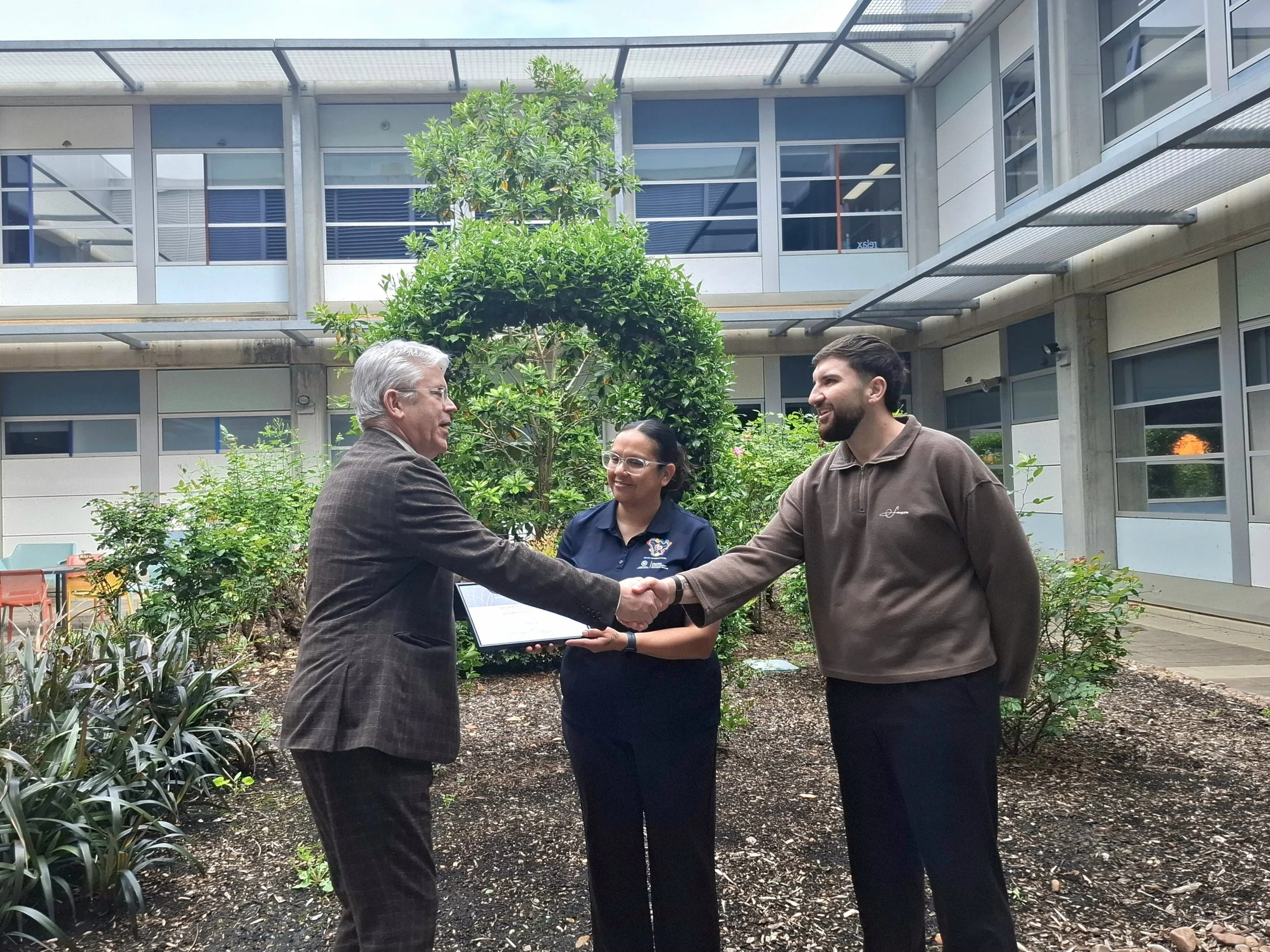
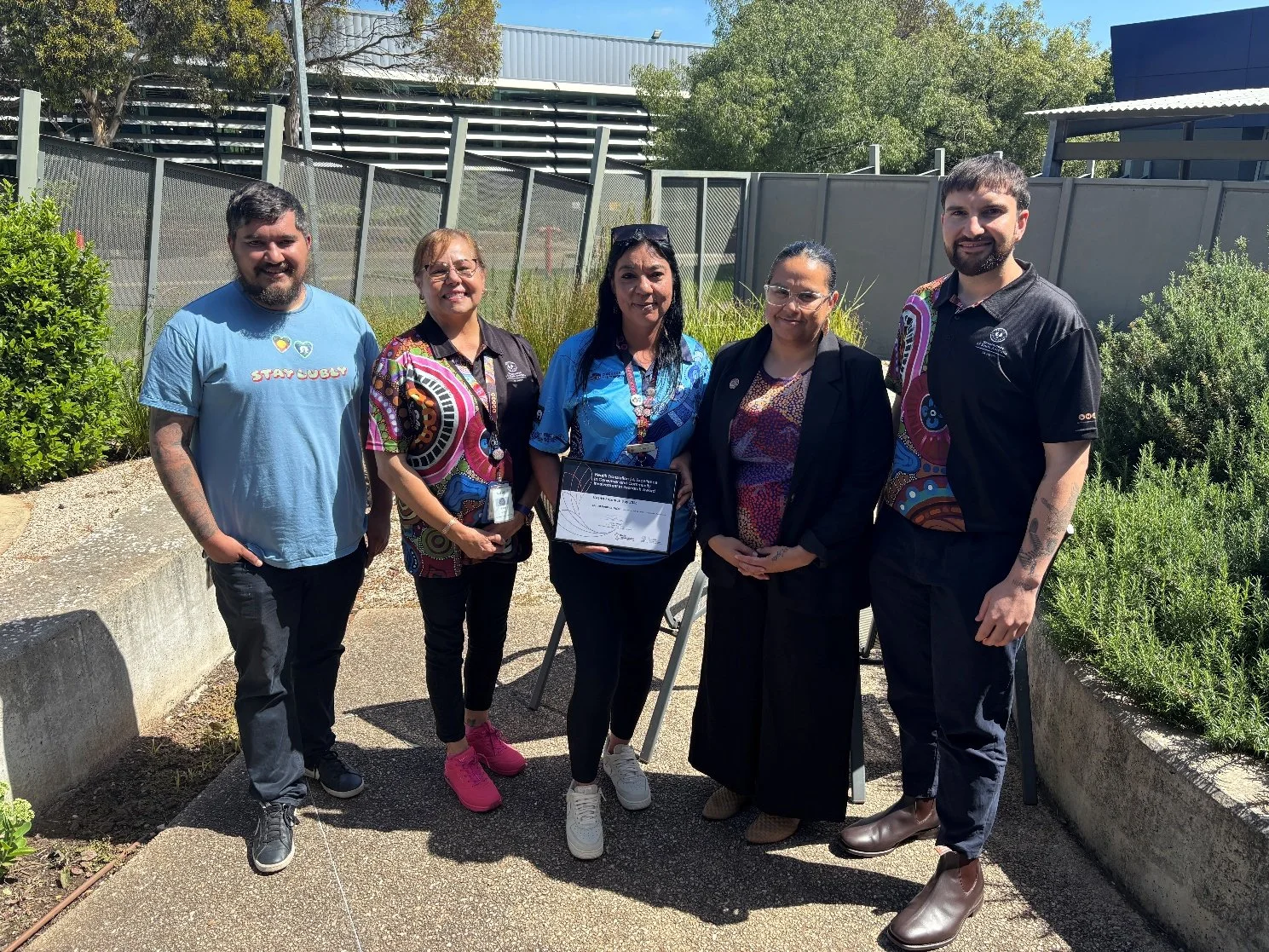
Jarrad Benbolt-Agius shared the news that the presentation Emerging Indigenous Design Principles for Culturally Safe Telehealth in Palliative Care: Findings from an Aboriginal–Māori Knowledge Exchange received this award.
NATSIPCA warmly congratulates Jarrad and the wider collaboration. This recognition honours the contribution of Aboriginal Elders, Māori kaumātua, consumers, families, practitioners and researchers whose knowledge shaped the work.
We are proud to share in this journey and to see community involvement and Indigenous leadership recognised through the project’s findings.

Watch and explore
Knowledge to carry forward
The Knowledge Exchange Day
Watch the edited Aotearoa New Zealand Knowledge Exchange Day film, shared by Dr Rosemary Frey and created by filmmaker Edward Marriott.
The Aotearoa report
Explore the hui, community visits and shared learning in the final Catalyst Grant NZ Report, including the central role of Indigenous governance, whānau and connection.
Read the Aotearoa report ↗Learning from the Adelaide roundtable
The Adelaide report identifies six connected areas: trust and relationship-building; cultural safety and local Ways of Knowing; racism and institutional accountability; access and language; workforce and Indigenous leadership; and the value of lived experience.
Participants described telehealth as a possible support for care when it enables flexible time, trusted relationships, kinship networks, local governance and return to Country. Community-defined cultural safety and outcomes should guide its evaluation.
Source: Adelaide roundtable report, December 2025.
Read the NALHN Research Week abstract
Emerging Indigenous Design Principles for Culturally Safe Telehealth in Palliative Care: Findings from an Aboriginal–Māori Knowledge Exchange
Background. Telehealth is expanding rapidly, but Indigenous voices have rarely led its design. To address this gap, an international partnership involving Aboriginal organisations in South Australia and Māori organisations in Aotearoa New Zealand undertook a two-stage knowledge exchange focused on culturally safe palliative care.
Aim. To identify shared Indigenous principles that can inform the design and implementation of culturally safe telehealth for palliative care through an Aboriginal–Māori knowledge exchange.
Methods. A two-stage international knowledge exchange was undertaken. Stage One involved an Aboriginal Yarning Round Table in Adelaide with more than 50 Aboriginal Elders, consumers, clinicians, researchers and health service representatives. Stage Two involved presentations, discussions and site visits with Māori health organisations, hospice services and community providers in Waikato, Aotearoa New Zealand. Themes were identified through synthesis of discussions, presentations and observations across both stages.
Results. Despite different health systems and organisational contexts, consistent principles emerged across both countries. Participants identified Indigenous governance and leadership as fundamental to telehealth design. Care was consistently described as relational, with trust, continuity and whānau-centred approaches prioritised over technology. Participants emphasised accessible and flexible technology, workforce capability in culturally safe digital practice, simplified system navigation, digital storytelling and lived experience as legitimate forms of knowledge. Across all discussions, telehealth was viewed as a tool that should strengthen community-led models of care rather than replace them.
Conclusion. This Aboriginal–Māori knowledge exchange identified shared Indigenous design principles that may inform future telehealth policy, service design and evaluation. The findings suggest that culturally safe telehealth is determined less by technology than by Indigenous governance, relationships and community-led models of care. As reflected throughout the knowledge exchange, “telehealth never replaces the heart of care. The heart of care is connection”.
With gratitude
Acknowledging the people and partnerships
We thank the Aboriginal Elders, Māori kaumātua, community members, consumers, families and carers who generously shared their knowledge and experiences, and the organisations that welcomed the exchange into their places of care. Their cultural knowledge, relationships and leadership are at the heart of this work.
Community and research partnerships
NATSIPCA acknowledges the shared contributions of these partners to the Catalyst project.
Rauawaawa Kaumātua Charitable Trust
Rangimahora Reddy and the Trust supported the project from its beginnings. The Trust welcomed the exchange to share knowledge and connection with kaumātua, with Māori community relationships at the centre.
University of Auckland
Dr Rosemary Frey, from Waipapa Taumata Rau — University of Auckland, coordinated the Catalyst Seeding project, supporting the international partnership and the sharing of knowledge across the exchanges.
Flinders University
Associate Professor Aileen Collier led the South Australian work. The Adelaide report also recognises Flinders University’s Research Centre for Palliative Care, Death & Dying and its contribution to the partnership.
University of Leeds
Professor Matthew Allsop led the United Kingdom work, contributing to the international partnership and shared learning about culturally safe Comfort Care and telehealth alongside community and research partners.
These partnerships bring community leadership, cultural knowledge and lived experience together with research expertise, strengthening shared learning about culturally safe Comfort Care and telehealth.
Walking alongside one another


Research Centre for Palliative Care,
Death & Dying


Project leadership and support
Dr Rosemary Frey, University of Auckland, coordinated the Catalyst Seeding project; Associate Professor Aileen Collier, Flinders University, led the South Australian work; and Professor Matthew Allsop, University of Leeds, led the UK work. Cindy Paardekooper (NATSIPCA), Toni Shearing (Northern Adelaide Local Health Network) and Rangimahora Reddy (Rauawaawa Kaumātua Charitable Trust) supported the project from its beginnings.
Funding acknowledgement
The Catalyst Seeding project was funded by the New Zealand Ministry of Business, Innovation and Employment and administered by the Royal Society Te Apārangi.
Culture · Connection · Continuing relationships
Carrying the learning forward